We Don't Just Count Answers. We Question the Numbers.
The Right People. The Right Questions. Clear Findings.
A survey is more than a questionnaire. It requires a defined audience, a suitable sample, carefully written questions, reliable collection methods and an explanation of what the results can actually tell us.
Moris Poll Pulse conducts political, consumer, brand, advertising and institutional research through study-specific survey methods.
From understanding voter preferences before an election to examining why consumers switch brands, we focus on collecting relevant responses and reporting the findings with appropriate context.
Fieldwork planned around respondents in {city}.
Samples designed for {state}, {country} and wider markets in {year}.
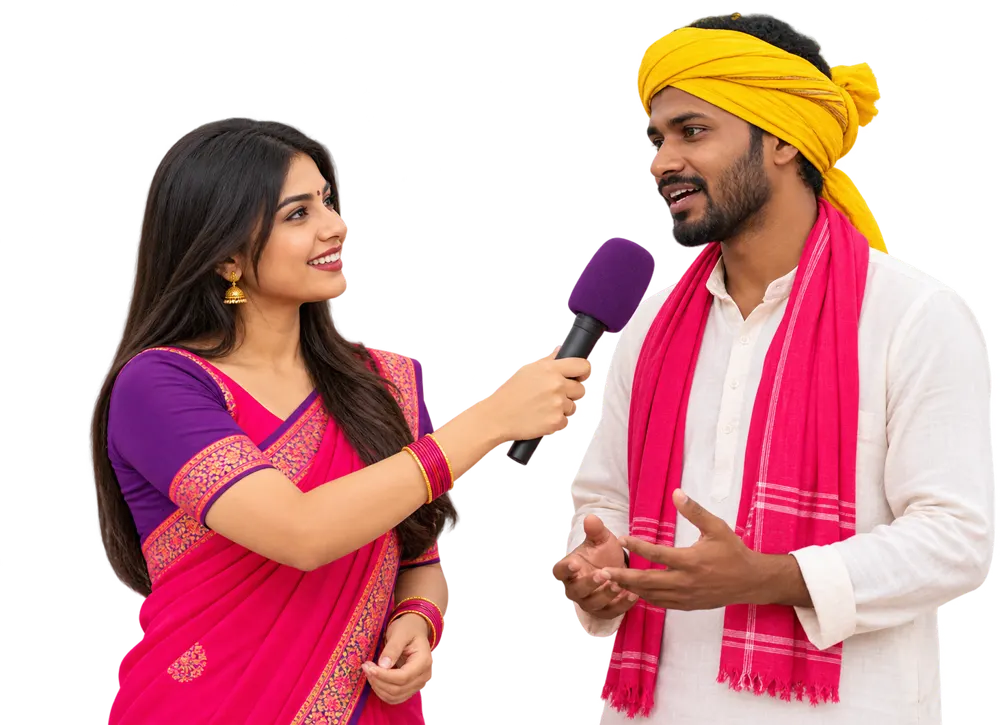
Every Number Needs a Reason.
Bigger Samples Are Not Always Better Samples.
Research Divisions
Political & Election Research and Brand, Consumer & Institutional Research.
Political Research Categories
A dedicated catalogue covering opinion polling, voter behaviour, election forecasts and post-election analysis.
Commercial Research Categories
Consumer behaviour, brands, advertising, customer experience, institutions and business audiences.
Listed Research Types
Research and analytical service types across both divisions.
Core Collection Channels
Online questionnaires, telephone interviews, face-to-face fieldwork and paper-based surveys.
Research Stages
From understanding the research question to reviewing the final findings.
Different Questions Require Different Methods.
Elections and Consumers Cannot Be Measured Identically.

Division 1: Political & Election Research
Political research examines voter intentions, party preferences, leadership perceptions, public policy attitudes, turnout intentions and electoral developments. Studies may be conducted before voting, during an election period or after results are declared. Where the research supports it, findings may include vote-share estimates, seat projections and comparisons with official results.

Division 2: Brand, Consumer & Institutional Research
Commercial and institutional research examines purchasing decisions, brand awareness, advertising effectiveness, customer satisfaction, product preferences, stakeholder expectations and public perceptions. These studies help organisations understand their defined audiences and evaluate questions relevant to business or institutional decisions.
A Common Research Commitment. Both divisions require suitable sampling, neutral questions, data quality checks, responsible analysis and clear disclosure of limitations. The research method is selected according to the study, not the other way around.
The Right Respondents Depend on the Question.
Not Everyone Belongs in Every Survey.

Voters & Political Audiences
Eligible voters, first-time voters, undecided voters and other defined electoral populations.
Consumers & Shoppers
Existing buyers, potential customers, category users and consumers considering competing products.

Brand Audiences
People who recognise, use, consider or evaluate a particular brand or product category.

Business Decision-Makers
Business owners, procurement professionals, purchasing managers and other relevant organisational respondents.

Customers & Service Users
People who have purchased a product, completed a transaction or used a particular service.

Employees & Workplace Audiences
Employees, managers and other workplace groups relevant to organisational research.

Institutional Stakeholders
Members, beneficiaries, service users, partners and communities associated with an institution.

Citizens & Communities
Residents or other defined populations whose views are relevant to public services, social issues and community research.
Each study specifies respondent eligibility before data collection begins.
Before the Vote. During the Vote. After the Result.
Elections Have Stages. Research Has Questions.
Our 21 political research categories.
Before Election Day
Pre-Election Opinion Poll
Measures voter preferences, political attitudes and stated voting intentions before ballots are cast.
Benchmark Political Survey
Establishes an initial measurement of political preferences against which subsequent research can be compared.
Political Tracking Poll
Uses repeated research waves to examine changes in voter preferences during an election campaign.
Rolling Opinion Poll
Updates polling estimates regularly using defined overlapping collection periods.
Constituency-Level Survey
Examines voter preferences and relevant political issues within a particular electoral constituency.
State & Regional Political Survey
Studies political attitudes across selected states, regions or administrative areas.
National Political Opinion Survey
Measures public political attitudes within a defined national population.
Leadership Approval Survey
Examines approval, disapproval, familiarity and perceptions of political leaders.
Political Party Perception Survey
Measures party recognition, public associations, trust and stated preference.
Public Policy & Issue Survey
Studies voter opinions on issues such as employment, public services, economic conditions and government policies.
Voter Turnout Intention Survey
Examines respondents' stated likelihood of voting and relevant participation factors.
First-Time Voter Survey
Studies the political attitudes, information sources and participation intentions of eligible first-time voters.
Undecided Voter Survey
Examines the preferences, concerns and decision factors of respondents who have not selected a candidate or party.
Political Alliance & Coalition Survey
Studies voter responses to political alliances, coalition possibilities and government formation scenarios.
Parliamentary Seat Projection
Estimates seat distribution using polling information and a clearly described estimation method.
During Voting
Exit Poll
Collects reported voting choices from people who have already voted, usually immediately after they leave polling stations.
Election-Day Voter Survey
Studies the characteristics, experiences and reported choices of participating voters.
Election Turnout Research
Examines participation patterns using appropriate survey information and available official turnout data.
After Voting & Results
Post-Election Voter Survey
Studies reported voting behaviour, motivations and experiences after an election.
Election Prediction Accuracy Analysis
Compares original published estimates with official outcomes using defined numerical measures.
Electoral Behaviour & Historical Trend Study
Examines changes in participation, party support, constituency results and voting patterns across election cycles.
Every Business Question Deserves Relevant Evidence.
Search a survey type or research question.
Research Catalogue: 21 political research categories and 97 commercial and institutional research categories, representing 118 listed research and analytical service types. Some categories overlap and may be combined within a single commissioned study.
We Choose the Method Around the Audience.
Some Respond Online. Others Prefer a Conversation.
01Face-to-Face Interviews
Researchers speak directly with eligible respondents using a structured questionnaire. Face-to-face interviews may be appropriate for location-specific studies, constituency research, consumer interviews and communities where digital access is limited.
Typical Applications: Election fieldwork, public service research, rural consumer studies and location-based customer surveys.
 02
Telephone Interviews
Interviewers contact eligible respondents and record answers using a standard questionnaire. Telephone research may be appropriate for defined customer groups, political opinion studies, service evaluations and business interviews.
Typical Applications: Customer satisfaction, voter opinion, service feedback and B2B research.
 03
Online Surveys
Participants complete questionnaires using a mobile phone, tablet or computer. Online studies may include written questions, images, product concepts, advertisements or other research materials.
Typical Applications: Brand awareness, advertising recall, consumer preference and digital experience research.
 04
Paper-Based Questionnaires
Respondents complete printed questionnaires independently or with interviewer assistance. This method may be appropriate in certain workplaces, institutions and field environments.
Typical Applications: Employee feedback, institutional surveys and selected community studies.
Mixed-Method Studies & Supporting Methods
A study may combine collection channels to address coverage requirements or research objectives. The different collection modes must be documented and assessed for potential differences in responses.
- Focus Groups: Moderated discussions exploring views, motivations and experiences.
- In-Depth Interviews: Detailed conversations with selected participants.
- Product Testing: Structured feedback from participants who evaluate a product or concept.
- Observational Research: Documented examination of relevant behaviour in appropriate settings.
- Digital Conversation Analysis: Examination of relevant public online discussions, reported separately from survey respondents.
These methods provide additional context but should not automatically be treated as statistically representative population surveys.
Representation Matters More Than Volume.
A Large Sample Can Still Miss the Audience.
Respondent selection is among the most important decisions in survey research. The sampling method determines which people have an opportunity to participate and affects how confidently findings can be interpreted.

Probability Sampling
Where suitable population lists and recruitment conditions exist, respondents may be selected using probability-based methods. These methods support statistical inference when their assumptions are met and their limitations are properly addressed.
Stratified Sampling
A population may be divided into relevant groups before participants are selected. These groups may be based on geography, age or other characteristics important to the study.
Multistage Sampling
Researchers may select geographic or administrative units in stages before identifying eligible respondents. This can be relevant to large-scale geographic and election studies.
Quota Sampling
Recruitment targets may be established for relevant respondent categories. Quota sampling can help achieve a planned sample composition, but it does not by itself make a sample probability-based.
Purposive Recruitment
Specific respondent groups may be selected because they have experience or knowledge directly relevant to a study. This approach is commonly useful in qualitative and specialist research.
Online Panel Recruitment
Eligible participants may be recruited through appropriately managed research panels. The recruitment method, panel characteristics and quality controls should be documented.
Our principle: The sample design must fit the research question, and the report must explain what conclusions the design supports.
The Way You Ask Changes the Answer.
Neutral Questions Produce More Useful Evidence.
A survey can be affected by unclear language, leading statements, incomplete response options and the order in which questions are presented.
Moris Poll Pulse prepares questionnaires according to the research objectives and intended audience.
- Question Clarity: Use language respondents can understand without requiring specialist knowledge.
- Neutral Wording: Avoid unnecessarily suggesting that a particular response is expected or preferred.
- Relevant Response Options: Provide suitable choices, including appropriate alternatives such as uncertainty or non-applicability.
- Question Order: Consider whether earlier questions may influence later responses.
- Questionnaire Length: Keep surveys proportionate to the information required and the respondent's likely capacity to participate.
- Language Adaptation: Review translated questionnaires for meaning, consistency and cultural suitability.
- Pilot Testing: Where appropriate, test the questionnaire before full collection to identify confusing wording or practical difficulties.
A carefully written questionnaire helps reduce avoidable measurement problems.

From the First Question to the Final Finding.
Every Stage Has a Research Purpose.
1,000 Responses Do Not Automatically Mean 1,000 Representative Opinions.
Sample Quality Matters More Than Headlines.
A survey's usefulness depends on how respondents are selected and whether the resulting sample appropriately reflects the population being studied.
For example, a survey of customers who recently purchased a product may be useful for understanding those customers' experiences. It may not accurately describe the opinions of people who have never purchased the product.
Similarly, a political survey conducted only among highly engaged online participants may not represent all eligible voters.
Questions We Examine
- Who belongs to the target population?
- Which respondents are eligible?
- How will participants be recruited?
- Which geographic areas are included?
- Are important audience groups adequately covered?
- Are some respondents more likely to participate than others?
- Is statistical weighting appropriate?
- What limitations should accompany the findings?
May suit a focused study where the research objectives and design justify that sample.
May support broader estimates under an appropriate sampling design.
May provide additional observations for relevant comparisons and subgroup analysis.
May be appropriate for large geographic studies or research requiring more detailed group comparisons.
These are illustrations, not fixed sample recommendations or promises of statistical precision. A large sample cannot, by itself, correct poor recruitment or selection bias.
A Completed Questionnaire Is Not Automatically a Valid Response.
Collection Is Only the Beginning.
Survey quality requires attention before, during and after fieldwork.

Eligibility Checks
Confirm whether respondents meet the criteria established for the study.

Duplicate Response Review
Identify possible repeated submissions where the collection method supports such checks.

Response Consistency
Examine relevant contradictions or implausible answer patterns.

Questionnaire Logic
Check whether respondents received appropriate questions based on their earlier answers.

Interviewer Quality Review
Where interviewer-led methods are used, review collection procedures and relevant fieldwork records.

Survey Duration Review
Identify unusually rapid completion patterns that may require examination.
Sample Composition Review
Compare the achieved sample with the intended research population and sampling plan.

Data Processing Review
Document relevant exclusions, corrections and weighting decisions.

Reporting Review
Ensure conclusions are supported by the collected data and that limitations are not omitted.
Quality checks help identify potential problems. They do not eliminate every source of research error.
Responses Become Findings. Findings Require Context.
A Percentage Without Context Can Mislead.
Once collection and quality review are complete, responses are analysed according to the study objectives.
- Descriptive Analysis: Summarise response counts, percentages, averages and relevant distributions.
- Audience Comparisons: Examine differences among relevant respondent groups.
- Geographic Comparisons: Compare findings across selected cities, regions or markets where sample sizes and study design permit.
- Tracking Comparisons: Examine changes across repeated research waves.
- Relationship Analysis: Investigate relevant associations between reported attitudes, experiences and behaviours.
- Statistical Weighting: Where justified, adjust responses to reflect relevant known characteristics of the target population.
- Qualitative Interpretation: Summarise themes from interviews and discussions without treating them as population percentages.
- Research Limitations: Identify factors that may affect the interpretation or wider applicability of results.
The final report should help readers understand both the findings and the boundaries of the evidence.

Show the Numbers. Explain Their Meaning.
Transparency Makes Research Easier to Evaluate.
| Disclosure | What it tells the reader |
|---|---|
| Research Objective | What the study examined. |
| Commissioning Information | Who conducted and funded the research, where disclosure is applicable. |
| Target Population | Whose views the findings concern. |
| Research Geography | Where the study was conducted. |
| Research Dates | When responses were collected. |
| Sample Size | How many eligible responses were included. |
| Sampling Method | How respondents were selected or recruited. |
| Survey Channels | Whether collection occurred online, by telephone, in person or through another method. |
| Questionnaire | The questions and response options relevant to the published findings. |
| Data Processing | Relevant exclusions, quality checks and weighting. |
| Statistical Uncertainty | Appropriate precision information where justified by the sampling method. |
| Research Limitations | Factors that readers should consider when interpreting the results. |
Sample Study: Household Water Services Satisfaction
Fictional example for layout only. 1,000 adults, online and telephone, 1 to 14 March. Weighted by age, gender and region.
Limitations: nonprobability online panel; no conventional margin of error is stated. Findings describe respondents, not every resident.
Geography Changes the Research Question.
Different Markets Need Relevant Respondents.
Moris Poll Pulse supports the planning and coordination of studies across selected Indian and international markets, subject to project requirements and fieldwork availability.

🇮🇳 India
Research may examine voters, consumers, customers, businesses and institutional audiences across selected states, cities and constituencies, with urban, semi-urban and rural audiences and multiple languages.
🇦🇪 United Arab Emirates
Studies may require multilingual questionnaires and careful consideration of the country's diverse resident and consumer populations.
Middle East & GCC
Research may examine regional differences in purchasing behaviour, brand perception, digital media use and stakeholder expectations.
International Political Research
Election research must account for local electoral structures, voting eligibility, legal restrictions and publication requirements.
Cross-Market Research
Studies comparing multiple countries require consistent measurement while allowing appropriate language and cultural adaptation.
Research Should Be Useful Beyond the Presentation.
Deliverables Must Match the Research Question.
Depending on the approved scope, Moris Poll Pulse research deliverables may include:
- Research consultation
- Written research objectives
- Target audience definition
- Study scope and geographic coverage
- Questionnaire preparation
- Sample planning document
- Research methodology summary
- Fieldwork schedule
- Data collection management
- Response quality review
- Aggregated response tables
- Audience segment comparisons
- Statistical analysis
- Brand or consumer findings
- Political polling findings, where applicable
- Charts and research visualisations
- Research limitations statement
- Executive findings summary
- Detailed research report
- Findings presentation
- Optional tracking study recommendations
The final scope, sample, collection channels, reporting format and timeline are confirmed in the project proposal.

Ask the Questions Behind the Decisions.
What Do You Need to Know?
Why are consumers choosing competing products?
Do people remember the message after seeing the advertisement?
What matters most when customers choose where to shop?
Which product features influence purchase consideration?
How do customers perceive service quality and digital convenience?
What factors influence employee satisfaction and retention?
How do service users evaluate accessibility and responsiveness?
How are voter preferences changing before an election?
What do documented public opinion findings indicate about a particular issue?
How do audience preferences differ across geographic markets?
Protecting People Is Part of Responsible Research.
Respondents Share Opinions, Not Ownership of Their Privacy.
Survey participants may provide personal information, experiences or opinions that require careful handling.
Research should use appropriate consent, data minimisation, access controls and retention practices.
Personally identifiable information should not be disclosed in public reports without an appropriate lawful basis and authorisation.
Client-specific information should be handled according to the relevant project agreement.
Sensitive research topics may require additional safeguards.
Political research should also comply with applicable electoral, publication and data protection requirements.
Confidentiality is a research responsibility, not a substitute for methodological quality. Both matter.
Understanding How We Survey
How does Moris Poll Pulse conduct surveys?
Moris Poll Pulse selects methods according to the study objective, target population and research requirements. Surveys may be conducted online, by telephone, in person or through a combination of methods. Each project requires suitable respondent recruitment, questionnaire preparation, data quality checks and reporting.
How many respondents are required for a reliable survey?
The required sample depends on the population, sampling method, desired precision, subgroup analysis and purpose of the study. There is no universal sample size that makes every survey reliable.
Does Moris Poll Pulse conduct political surveys only?
No. Political and election research is 1 of the initiative's principal divisions. Moris Poll Pulse also covers consumer behaviour, brand perception, advertising effectiveness, customer experience, employee research, institutional studies and B2B research.
What is the difference between an opinion poll and an exit poll?
An opinion poll generally measures preferences before voting. An exit poll interviews people who have already voted, usually immediately after they cast their ballots.
Can a survey combine online and field interviews?
Yes. Mixed-method collection may be appropriate for some studies. Researchers must consider differences in respondent recruitment, coverage and the way people answer questions across collection modes.
How does Moris Poll Pulse protect respondent information?
Research should use appropriate consent procedures, confidentiality controls, restricted access and aggregated reporting. Specific practices depend on the project and applicable legal requirements.
Can a company commission a custom survey?
Yes. Organisations can request studies tailored to their research objectives, audience, geographic coverage and intended decisions.
Does Moris Poll Pulse guarantee survey accuracy?
No responsible survey can guarantee that every finding or prediction will match future behaviour. Research quality depends on its design, execution and interpretation, and all studies have limitations.
Can surveys be conducted in different languages?
Yes, where the required language resources and fieldwork arrangements are available. Questionnaires should be reviewed for meaning and comparability.
How can we request a research proposal?
Submit the research question, target audience, location, intended timeline and preferred deliverables. The research team can then assess an appropriate study design and commercial scope.
Request a Research Proposal
Your Next Decision Starts With a Better Question.
Before You Ask 1,000 People, Ask Us 1 Question.
What Exactly Do You Need to Understand?
Tell us what your organisation wants to learn. Whether the subject is a consumer decision, brand perception, customer experience, public opinion or an election, Moris Poll Pulse can help assess the appropriate research design.
Now planning {year} studies for organisations in {country}.
MORIS POLL PULSE | Political, Consumer, Brand & Institutional Research by Moris Media